English translation is being prepared.
Matched fieldsSummary、Body
Matched fieldsSummary、Body
Matched fieldsSummary、Body
Matched fieldsSummary、Body

Matched fieldsSummary、Body
Matched fieldsSummary、Body
Matched fieldsSummary、Body
Matched fieldsSummary、Body
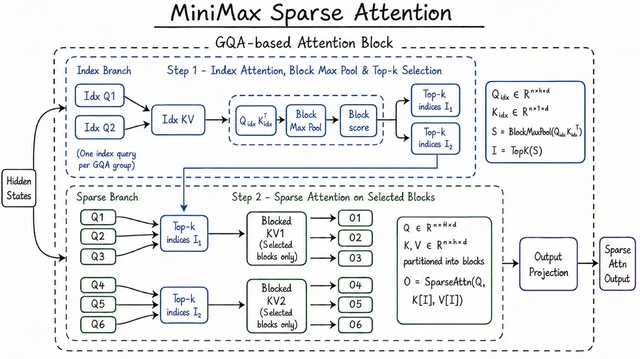
Matched fieldsSummary、Body
Matched fieldsSummary、Body
Matched fieldsSummary、Body

Matched fieldsSummary、Body
Matched fieldsSummary、Body
Matched fieldsSummary、Body
Matched fieldsSummary、Body
Matched fieldsSummary、Body
On November 3, 2026, the official AWS Machine Learning blog published a tutorial on how to build an efficient shopping agent on Amazon SageMaker AI using sequence-level knowledge distillation (SeqKD). The tutorial uses GLM-5.3 on Amazon Bedrock as the teacher model to generate trajectories, uses the ShoppingBench scorer to retain only trajectories that solve the task, and then performs serverless SFT on the Qwen3.5-4B student model. On 324 held-out test questions, the average absolute success rate of the distilled 4B student rose from 0.297 to 0.541, essentially on par with the teacher model and mid-sized frontier models; when the teacher's reasoning process was removed and only tool calls were learned, the average success rate dropped to 0.415. The tutorial is now publicly available alongside the official blog post.
On November 3, 2026, the official AWS Machine Learning blog published a tutorial on how to build an efficient shopping agent on Amazon SageMaker AI using sequence-level knowledge distillation (SeqKD). The tutorial uses GLM-5.3 on Amazon Bedrock as the teacher model to generate trajectories, uses the ShoppingBench scorer to retain only trajectories that solve the task, and then performs serverless SFT on the Qwen3.5-4B student model. On 324 held-out test questions, the average absolute success ra
Matched fieldsTitle
On November 3, 2026, the official AWS Machine Learning blog published a tutorial on how to build an efficient shopping agent on Amazon SageMaker AI using sequence-level knowledge distillation (SeqKD). The tutorial uses GLM-5.3 on Amazon Bedrock as the teacher model to generate trajectories, uses the ShoppingBench scorer to retain only trajectories that solve the task, and then performs serverless SFT on the Qwen3.5-4B student model. On 324 held-out test questions, the average absolute success rate of the distilled 4B student rose from 0.297 to 0.541, essentially on par with the teacher model and mid-sized frontier models; when the teacher's reasoning process was removed and only tool calls were learned, the average success rate dropped to 0.415. The tutorial is now publicly available alongside the official blog post.
Matched fieldsTitle
View story:AWS releases a tutorial on distilling a shopping agent with SeqKD on SageMaker AI
On October 28, 2026, Google DeepMind released Gemini 4 Carbon, calling it its strongest model, ranking first with 59 points on the Artificial Analysis Intelligence Index v5.0, and scoring 88.2% on SEC-bench Pro, 54.8% on ExploitGym, and 71.0% on CWE-bench. The model is aimed at long-horizon engineering tasks and was first opened to some cybersecurity defenders, then expanded through the Fairwind Program, and afterward made available to developers, enterprises, and consumers. On October 29, Arena.ai said Gemini 4 Carbon ranked 2nd in Agent Arena with a net improvement of 16.2%, and was on the Pareto frontier for cost, time, and output tokens per task; the same day, Yuchen Jin cited Artificial Analysis data saying it was smarter than Opus 5.5 and cheaper per task, but noted that the evaluation used the Antigravity CLI. On October 30, the Artificial Analysis Intelligence Index showed it in first place with 59 points, 1 point higher than Claude Opus 5.5. On October 31, Perplexity CEO Aravind Srinivas shared early evaluations
Matched fieldsTitle
View story:Google DeepMind releases the Gemini 4 Carbon model
On October 30, 2026, Matt Palmer demonstrated opening Chrome and real Slack on the Linux remote desktop of the Cursor cloud Agent, having the Agent use code to generate a Slack interface motion animation video, and then iterating and revising after checking the easing and motion patterns against the real interface. He broke the process down into an inner loop (the Agent does the work, checks against the real thing, and fixes it) and an outer loop (a human provides references, preferences, and permissions and accepts the output), and proposed the ladder of Do→Codify→Generalize, turning one success into a Skill and then generalizing it. He emphasized that Slack was not decompiled; he merely gave the Agent a reference and asked it to extract visual patterns by comparison.
On October 30, 2026, Matt Palmer demonstrated opening Chrome and real Slack on the Linux remote desktop of the Cursor cloud Agent, having the Agent use code to generate a Slack interface motion animation video, and then iterating and revising after checking the easing and motion patterns against the real interface. He broke the process down into an inner loop (the Agent does the work, checks against the real thing, and fixes it) and an outer loop (a human provides references, preferences, and pe
Matched fieldsTitle
On October 30, 2026, Matt Palmer demonstrated opening Chrome and real Slack on the Linux remote desktop of the Cursor cloud Agent, having the Agent use code to generate a Slack interface motion animation video, and then iterating and revising after checking the easing and motion patterns against the real interface. He broke the process down into an inner loop (the Agent does the work, checks against the real thing, and fixes it) and an outer loop (a human provides references, preferences, and permissions and accepts the output), and proposed the ladder of Do→Codify→Generalize, turning one success into a Skill and then generalizing it. He emphasized that Slack was not decompiled; he merely gave the Agent a reference and asked it to extract visual patterns by comparison.
Matched fieldsTitle